6. Recovery Of National Autonomy
Throughout the whole period during which the Government were struggling with their own people to resist the premature demand for parliamentary representation, they were at the same time engaged in a diplomatic struggle with Western Powers which taxed their ability, coui-age, and determination to no less a degree than did the first.
The system of extra-territorial jurisdiction was introduced into all the original Treaties concluded between the Government of the Shogun and the Western Powers. Under this system, foreigners residing in or visiting Japan were exempted from the jurisdiction of Japanese law and were answerable, both in civil and criminal matters, only to their own authorities, administering the laws of their own countries. The framers of the treaties in stipulating for it, only followed an invariable precedent in all intercourse between Western and Oriental nations, ever since the establishment of the Ottoman Empire at Constantinople, one which is still jealously guarded in the case of every non-Christian country in the world except Japan. Even without these fjrecedents, it would have been impossible to contemplate the subjection of Europeans to the jurisdiction of a nation whose laws were unkhown but who, it was known, practised torture, persecuted Christians, and recognised no rights of personal freedom or security. The Shogun's ministers, on their side, were entirely ignorant of all principles of international law and custom and, unconscious that they were placing their country on any lower level than those with which they were forming new relations, they willingly agreed to the surrender of their sovereign rights of judicial and tariff autonomy.
In the first decade which elapsed after the conclusion of the treaties, while the Shogunate was still in power, no attempt was made to alter the situation which was thus created. Tlie internal condition of Japan and the complications with foreigners to which it gave rise were sufficient to absorb all the attention of the tottering Government without adding to its difficulties that of attempting to obtain any relaxation of the bonds that had been willingly signed. When the Emperor's Government came into office it had to assume all the obligations of these bonds and accept the situation which had been created by its predecessoi*s. But, in the meantime, Japan had grown in knowledge and had learned both theoretically and by very bitter experience that the extra-territorial provisions of the treaties were a national stigma, derogatory to the prestige of a civilised and independent state.
The disabilities imposed on her by the treaties were sufficiently glaring to justify her utmost discontent. Identical treaties were made with no less than eighteen Western Powers, each one of which had its own system of consular jurisdiction and administered its own national laws, and only one among them all ever made provision for their full and effective administration. Great Britain, almost from the very first, established not only consular courts at every port at which foreigners were permitted to reside, presided over by highly-trained officers, qualified for the discharge of the important judicial duties that were entrusted to them and vested with very extensive powers of both civil and criminal jurisdiction, but founded a court of appeal in Japan and a still higher court at Shanghai, both of which exercised unlimited jurisdiction and were administered by judges whose professional ability and experience were unquestionable. The British Minister was also vested with legislative powei-s under the Sovereign's Orders in Council which enabled him at his discretion to give legal sanction, so as to make them enforceable in the local English courts, to any Japanese laws and ordinances that could equitably be applied to his countrymen.
The case was very different with all other Powers. No other ministers were vested with the law-making prerogative of their British colleague. None could render Japanese ordinances enforceable on their countrymen, who might therefore violate with impunity regulations, such as those of quarantine, which were essential for the general welfare of Japanese and foreigners alike. The consuls of most were trading consuls, quite incompetent to exercise judicial fimctions, not always honest in the exercise of such capacity as they possessed, and even consuls de carriere were very limited in the extent of the jurisdiction that was conferred on them by their own governments, so that capital and other serious offences committed by their countrymen generally went entirely unpunished. There were no courts of appeal nearer than Leipzig, Paris or Washington, which were entirely inaccessible to Japanese prosecutors or plaintifls, and gross miscarriages of justice in serious cases, even when facts and law were entirely beyond dispute, were the rule i-ather than the exception.
Very early in its career the Emperor's Government attempted to procure a revision of the treaty clauses which they felt inflicted so great a wrong on their country. In 1871, a great embassy was sent to Europe for the purpose, but as was natm*al it totally failed in its object The laws and system of punishment in Japan, though greatly modified from what they had been when the treaties were made, were still founded on the old Chinese models and entirely inapplicable to Europeans. Torture was still practised. Not only was the offensive prohibition of Christianity still in public existence, but native Cliristians were actually being cruelly persecuted at the time when the Embassy was on its mission. The chief result that ensued from it was the enforcement of the lesson on Japan that there was no prospect of the realisation of her desire until she reformed her legal system and penal codes on European standards.
It is not an exaggeration to say that the recovery of the full national rights with which she had parted in her ignorance was the motive which mainly inspired all Japan's great reforms. It was that which urged her to reform her legal system ; to withdraw the prohibition of Christianity and make all religion free ; to raise the material and educational status of her people to the level of the most enlightened nations of the West, so that their claim might become morally unanswerable ; and to develop her great military system so that her claim, if refused on moral grounds, might be backed by force.
Long years of wearisome diplomatic negotiations passed away and Japan had given the most ample evidence of her own advance in all the elements of internal civilisation before her aspirations were at last realised. At first the negotiations were carried on in Tokio, where two conferences were held, the first in 1882 and the second in 1886, between the Minister for Foreign Aflairs and the assembled Diplomatic Representatives of all the Treaty Powers. Under the treaties, foreigners enjoyed the rights to reside and trade only at certain cities on the coast, specified in the treaties and known as the open ports, and in Tokio ; but from the middle of the seventies they had also been permitted as a privilege to travel in the interior for purjioses of health or pleasure. This concession, it may be remarked, speedily became the source of very considerable gain to Japan from the money spent both by residents and travellers, which steadily increased with the development of travelling facilities and of the knowledge of all the great natural beauties of the country. The opening up of the whole country to both trade and residence was offered in return for the abolition of the objectionable clauses in the treaties, but even this concession, with all its possible commercial advantages, was not sufficient to overcome the reluctance of Great Britain to submit her citizens to the jurisdiction of laws that were neither as yet tolerable in themselves nor furnished with complete machinery for their adrainisti*ation.
The difficulties which the Japanese negotiators had to overcome were enough to dishearten tl^ most optimistic among them. They had to deal with the representatives of eighteen Powers, all of whom were of equal rank, all with equal rights to a hearing, so that the British representative, with the duty of safeguarding immense commercial and shipping interests and the persons and property of a large resident British population, surpassing at that time in both cases the aggregate of those of all other nationalities in Japan, had only the same voting power in the conferences as the representatives of Austria and Spain, who had neither trade nor citizens to protect, or of such insignificant Powers as Portugal and Belgium, whose captiousness was not infrequently in inverse ratio to their legitimate influence. All the treaties contained "most favoured nation" clauses which entitled all the Powers to claim any special concessions that were made to any one without submitting to the conditions that accompanied them. All the Powers were supposed to be acting in harmony, but their representatives had each different axes to grind. Russia's interests in Japan were entirely political and she cared nothing for trade nor for the protection of European residents in Japan among whom few of her own subjects were included. Great Britain carried on a great import trade and it was her object to prevent that trade from being burthened with oppressive duties. The United, States on the other hand, though the largest purchaser of Japan's exports, had then practically no import trade and were therefore able, ^vithout any cost to themselves, to give full indulgence to a sentimental friendship and their warmest support to Japan's claim to omplete tariff autonomy. And similar differences were apparent in the cases of all the other great Powers, while as to the smaller, with no material interests whatsoever, >vithout either moral influence or any pretence of military strength, it was within the prerogative of any one to render nugatory formal concessions even if they were unanimously made by all the others.
When further progress had been made in legal reform. Great Britain withdrew in some degree from the rigid attitude she had hitherto preserved, and in conjunction with Germany and the United States gave a modified acceptance to the Japanese proposals. But then a new difficulty arose. The political intelligence of the people had advanced in ratio with their material progress. The press had grown in influence and ability, and it was now openly declared by the people and in the press that no half measures could be tolerated and that no revision of the treaties could be accepted that was limited with conventional restrictions of any kind, or that failed to confer on Japan the fullest rights of an independent and civilised nation. A violent agitation spread throughout the whole country and it was accompanied by a dangerous outbreak of anti-foreign prejudice, one incident in which was the attempted assassination of the present Czar of Russia, who as Czarewitch was then visiting Japan. An attempt was also made to assassinate Count Okuma, at that time Minister for Foreign Affairs, and when the first Parliament met under the new constitution, its members were no less persistent and outspoken than their constituents in urging upon the Government its duty to obtain, without further procrastination, the realisation of the national aspirations in their widest sense.
Nearly twenty years had elapsed since Japan had made her first essay towards procuring a revision of the obnoxious Treaties and she seemed at this juncture, notwithstanding all the evidence she had given of material progress and of her desire to harmonize her institutions with those of the West, to be no nearer the end than she had been at fii*st. European residents in Japan of nearly all nationalities still contemplated with the strongest aversion their unconditional subjection to the jurisdiction of the native judicial and executive officials and were strong enough to bring pressure that could not be ignored to bear on their Diplomatic Representative* on the spot. And the Japanese people were still more adamant in their insistence that no revision which was not entirely unconditional would solace their long-outraged national dignity or be in keeping with the terms of the constitution they had just obtained. Then, when matters were at their very worst and a hopeless impasse seemed to have been reached, the Japanese Ministers gave one more proof of the marked diplomatic talent which they had already displayed on several occasions in international affairs and have since so frequently testified both in war and peace.
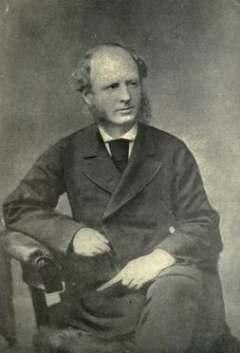 Sir Harry S. Parkes
 They suddenly terminated all discussion in Tokio, disregarded the representatives of the Powers with whom they had so long been vainly arguing, and transferred all their activities to Europe where they dealt not with the Powers in conference but with each separately and under the pledge of secrecy. Great Britain was still the Power whose consent it was most important to win, though she no longer held the predominant moral, commercial or military prestige in the Far East which she did throughout the earlier negotiations. Both Germany and the United States were now beginning to show themselves as commercial rivals and to display their naval flags where they had been seldom seen before. Sir Harry Parkes, the masterful minister of long Eastern experience, had gone and had been followed by successors who had neither experience nor knowledge of Japan, and whose last idea in their own interests was to criticise or oppose any steps that might be taken by the Department at home under which they served and which would be the arbiter of their future careers. In the Foreign Office in London, the astute Japanese Minister accredited to Great Britain had an easy task. Its officials, both ignorant and badly advised as to the interests they were sacrificing, yielded to all his proposals and on July 18, 1894, a treaty was signed in London which unconditionally conceded everything that was necessary to realise the most extravagant Japanese claims. The other Powers gradually, though in some instances slowly and reluctantly, followed Great Britain's example, not however without securing as a quid pro quo some slight concessions for the benefit of their trade and countrymen in Japan to which the British Foreign Office had been loftily indifferent, and on June 30, 1899, the operation of all the old treaties came simultaneously to an end and for the first time in history, large, rich, and intelligent European communities became subject to the unfettered jurisdiction of an Oriental and non-Christian Power.
It was naturally a day of universal rejoicing throughout Japan, even more so than that of the promulgation of the constitution. The ambition persistently cherished and fought for throughout more than a quarter of a century had at last been attained and Japan had won her entry on terms of absolute equality into the comity of nations. European residents in Japan looked, ho\Tever, to the future with profound misgivings. They thought that their personal liberty, hitherto securely guarded by their OT^Ti authorities, was endangered, that their trade was threatened with ruin, and that their lives would become intolerable under the petty pei-secutions to which they would be always liable at the hands of the lower classes of the Japanese officials. Their experience as plaintiffs or prosecutors in the Japanese civil and criminal courts filled them with dismay when they thought of what it would be when they were forced to appear in the roles of defendants or accused. Hitherto they had been immune from taxation ; they would henceforth be liable to whatever burthens a parliament, in which they were entirely unrepresented, whose members bore them no goodwill, might impose on them. The feelings with which they contemplated the new order of affairs to which they would thenceforward have to bow their heads, may be aptly compared to those of the most implacable Ulster Orangeman, when he thinks of his future under Home Rule, with the single exception that they anticipated none of the interference with their religion on the part of heathen governors of another race which the Orangeman professes to dread from his Roman Catholic fellowcountrymen. The voteless British residents in Japan had no one to voice their grievances in Parliament, and the new conditions, harsh though they seemed, had to be accepted. When that was recognised, all the European communities at once united as practical business men to make the best of what was irretrievable and they were aided in doing so by a new spirit which developed itself among the Japanese.
All lingering traces of the old anti-foreign prejudices seemed to disappear at once. That this was so was primarily due to the Emperor who issued a special rescript to his people, declaring : -
his earnest wish that all his subjects should unite with one heart to associate cordially with the people from far countries and that his officials of all classes should observe the utmost circumspection in the discharge of their duties, so that Japanese and Foreigners might enjoy equal privileges and advantages.
The Emperor's wishes are received by his subjects as divine commands, and as such they were now unreservedly obeyed. The instances in which Japanese officials have made arbitrary or unjust use of the powers with which they are now vested have been of rare occurrence, and few of the forebodings of the Europeans have been realised, natural as they were at the time. They have had to submit to regulations, many of which are inconsistent with their conceptions of personal freedom, to heavy personal taxation, to oppressive duties on their trade, and in some instances to inequitable decisions in the local courts of justice. But their trade, so far from being ruined, has more than doubled in its volume if not in its profits, and they have enjoyed a greater degree of personal liberty and of security of life and property than is accorded to foreigners in many Christian countries. Japan has not shown herself to be unworthy of the trust that has been reposed in her, hazardous as it was thought by the most competent authorities to be at the time at which it was conferred.